Monday, October 31, 2011

Week 8

What I did

Monday: [3hrs]
I'm thinking about collaborative mail art. I'm really interested in different languages and how they look visually since I can't read most of them. I wonder what kind of project could circulate, accumulate these words, and come home. It would be my visual poetry with written poetry from around the world.

Mail Art
By country
USPostal Mail conditions by country

visualpoetrymailartexhibit.blogspot

Rewrote project proposal to show at Tuesday Crit


Tuesday: Critique presented some issues I knew that I had coming however after going to work
I had an epiphany. I had spoke to my father on the phone. I thought of a way to combine narritive, visual communication, paper craft, practicality, and interaction by creating paper pinhole cameras.
This also taps into my interest in mechanical camera structure. In my free time I repair old soviet 35mm cameras.

[5hrs] 

http://camera-wiki.org/wiki/Homemade_pinhole_camera#Roll_film_or_sheet_film
Slide film vs. 35 mm, spoke to my dad about the pros and cons.
http://www.alfagraphics.com/
Walgreens supposedly develops slide film.

Thinking of ways to eliminate variables, sending sheet film to limit use to one photo per receiver.
There would be a greater motivation and control from volunteers, if I establish a network and promote the idea.

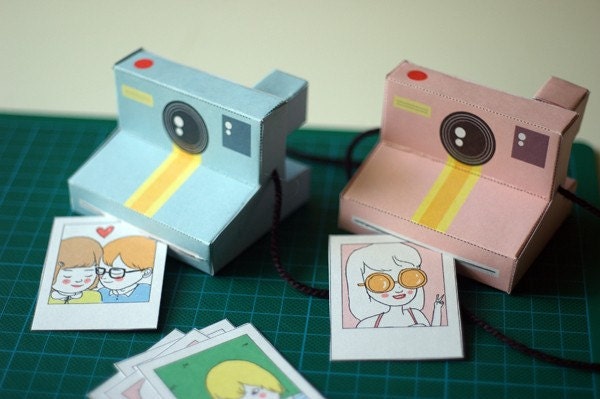
During studio I researched paper-pinhole cameras and found a 1979 czechloslovakian paper camera printed in magazines to avoid communist censorship for image creation. I printed the "Dirkon" and began to assemble it, despite the fact that the instructions are in Czech. By doing this, I was able to see the key components that I need to design my own camera.

I found this project when I thought I had this epic idea, and found a lot of simularities and really clever solutions to things I didn't even think about. This is part of my artist resource.
http://www.petapixel.com/2010/12/22/concept-cardboard-pinhole-camera-shoots-instant-photos

I want to push the idea further though, past friendship.


I just realized how crucial the IP grant is to this project. I pay for my education through financial aid, working every year to save (since 15), and loans. The grant form asks if you receive any financial aid, but it all goes to my tuition. I hope I can pull this project off, because without the funds for film, and paper, (and postage), I'm sunk.


Wednesday: [2hrs] Budget planning, calling printers in ann arbor to get price estimates for fullcolor digital printing on cardstock, film prices, and postage prices. Also contacted Matt Shlian about suggested weights of cardstock and where to find it.

Rewrote Proposal again:


My integrative project focuses on visual poetry and communication. I have a passion for paper folding, and I plan to create interactive paper forms that have the potential tell a narrative through pacing and sequence of folding.  I envision these as easy-to-assemble paper-craft that require the user to engage in and establish a relationship with. The narratives will contain text, prompting a visual response. Specifically, I want to focus on designing paper pinhole cameras that prompt the receiver to photograph their favorite place in the world. My paper-craft pieces would be the medium for understanding people’s attachment to location and feeling their personal stories through their responses. The user engages with the structure, feels something, and adds their reaction. To eliminate all variables, I would like to send these paper craft with a single slide of film to willing volunteers following a “mail-art” structure, with a return postage and use their collection stories in the gallery space. I will promote the project to build a database and community who will be willing to participate. The challenge is to find a way to incorporate interaction, interest and understanding, while keeping motivation to return the work. 

Thursday: [6hrs] I kept working on the Dirkon (czech) paper camera model to see how it works. There is a shutter mechanism and a removable cover to insert 35mm film. During studio hours I also scanned this book that my friend had in her IP studio. It taught me that the whole concept of a camera started from the notion of "camera obscura" meaning vaulted dark room, where a single hole in a wall could be used as basic projector for images onto walls. I took notes. I also spent some more time budgeting and researching papercraft cameras.


What I discovered 
I finally found a project that I'm interested in and excited to jump into. I found a way to combine papercraft, my passion for fixing up old cameras, visual communication, into one project.

To do next
Time to get my shit together. I found my passion right in time for my IP grant. I need to make prototypes to photograph for the grant, so I will start designing my own easy to assemble pinhole cameras. I obviously will need to test them out to make sure they work, which will be enjoyable.

Tuesday, October 25, 2011

Week 7

What I did

Friday: [2 hours] carved my block and shellaced it.


Saturday: [30 min] Shellaced block a second time.


Sunday: [1 hour] Did visual webs of packaging to try to brainstorm what I want to do.


Monday: [1 hour] Lindsay and I attempted to go see Matt Shlian at his studio, but he wasn't able to see us. We met at her apartment instead to brainstorm about our projects. We looked at papercut books and papercraft books. She gave me advice to think about fine arts and packaging together, since it strays away from big corporation design that I fell I was falling into a rut with.


[4 hours] printing my block in the print studio and doing exploration of 'poetic packaging' with the print. I used a suggestion from last week to try and use the same template from my "ziplock redesign". I did it by hand on butcher paper, because I love the texture and color of the paper, and because I wanted to work completely by hand without printing off a template from the computer.


Tuesday: My critique ended up making me feel more at ease with my apprehension of 'irrelevant' design.

[3 hours] Reviewed some artists in High Fructose and BlueCanvas magazines.
I also had this irrational urge to send my project to random addresses in central Europe.

Christophe Roberts, sculpture of old packaging (Lady shows scale)
christopheroberts.com


Kiel Johnson, camera of cardboard


Also, Beth Johnson was at an art fair with a fellow IPer last week. Beth Origami


Wednesday: [1 hour] Visit to Jim Horton's studio with AIGA members. Saw different letterpress and wood etching techniques.

Meant to visit Matt Shlian's studio with Lindsay as a reschedule, but felt nauseous. Majorly bummed.

Thursday: [0 hrs] Sick all day.
Read this article Micheal Rodemer sent out in September: Kickstarter Design

What I discovered
In my critique on Tuesday, I expressed that I felt interested while making the poetic packaging. It didn't seem like a chore anymore. However, it seems irrelevant to me, and it is something I am struggling with because I am used to practical design. I feel happy doing it, but my brain keeps asking me why it even matters. I am going to figure that out. 

What to do next
I am going to make an image that has more potential to be narrative in a package, then I will try to use that one print to make multiple explorations of how it is pacing. I also need to keep developing what my project is with brainstorming webs. After that, hopefully the meaning behind all this will appear to me.


Thursday, October 20, 2011

Week 6

What I did

Monday: Spent [.25hrs] reviewing a link that Krista sent me on packaging!
Creative Packaging Solutions

Tuesday: [0] Honestly spent time with my family.

Wednesday: Spent [.5hrs] writing this post. Thursday is a much better day for me if you want to skip ahead.

....
What am I doing?
This does not make me excited.
In fact I don't know why I'm doing anything.
I want to do something that makes a difference.
I want to do something practical,
I'm more excited about the poetic aspect of these things.
I guess that is somewhere to start.
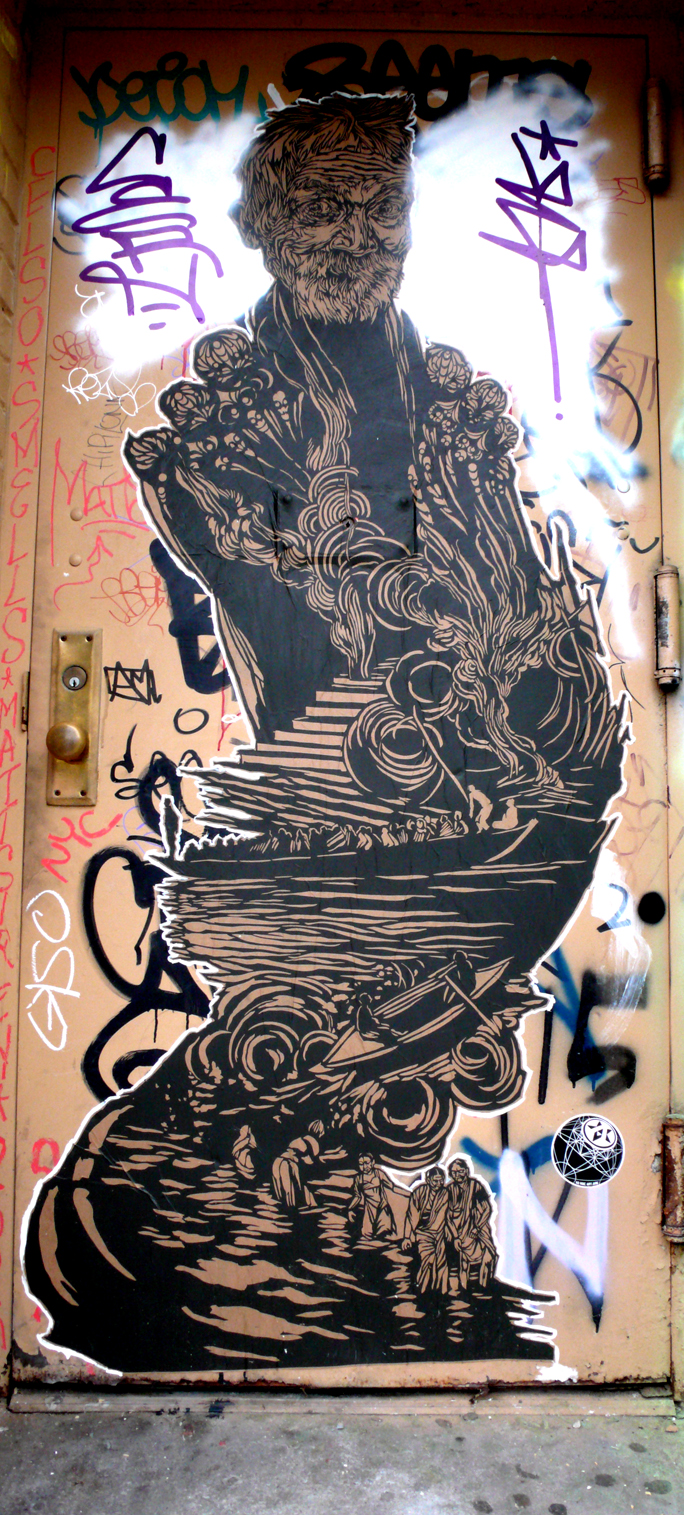
Also look at Swoon
Wheat-paste woodblock graffiti art, I can't stop looking at it.


Thursday: I spent [5 hours] finding all this amazing inspiration below. Most of them came up in conversation with my peers about things that they came across relevant to my project.

I just discovered The Dieline. How come I never knew about this? It's beautiful...

Here is a story they did on Postcarden
, a postcard that functions with seeds as a little bontanical garden.


Atlanta Cupcake factory packaging design 
Screen printed images on natural cardstock


Mary Rosamond design for cd packaging.
This is an example of pacing poetic visuals and text on the surfaces.
Also it incorporates printmaking (screen printing) to get this beautiful print on a functional package. 


Rochdale Cider Label redisgned by 
I love the texture and relaxed mood the paper and print are setting together. 


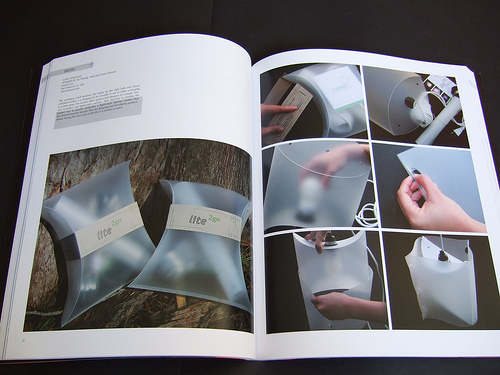
Here is the Lite 2 go piece I had mentioned in one of my very first blog posts.


Pumma's "Clever Little Bag"
A fabric alternative for shoe boxes.

I kept the red one in my apartment all last year! I love them

My friend sent this to me too: Mechanicards
It seems kitschy to me, but I've done work like this in the past based on paper tension and gromets.


Brainstorm:
Your life package?

Spent [1hr] cutting a woodblock to play with layout on the box form I made last week for poetic packaging exploration. It is a fawn with drafting tools as legs.

I figured I'd carve anything and see how it works with the pacing of the folds. 

What I discovered
I am excited again. Today is a gold mine of inspiration. I kept finding things one after another. It felt great. I want to incorporate printmaking into all of this somehow, perhaps through branding. After looking at the examples I've posted above, I feel pretty confident.
I notice that didn't spend enough hours on IP this week, due to distractions of fall break. I need to structure myself to make sure I get enough done.

What to do, what to do
For next tuesday crit I plan to have the block finished, and printed on the template I used for my ziplock redesign. Lindsay and I also made plans to visit Matt Shlian's studio on Monday afternoon to present our project ideas with him and see if he has any resources. Also, he is working on a project with scientists on some
"exciting...biomimetic, innovative..foldable...design helping the world...".
I'm curious, so I contacted one of the scientists to get involved and see what kinds of things they are working on.
Lindsay and I also have plans to do a 'paper folding session' together in the IP studio next week.

Thursday, October 13, 2011

Project Proposal and Weekly Plan


My integrative project is to develop sustainable packaging. Firstly, I plan to utilize paper material, since it is easily recycled and doesn’t require as much energy needed in extraction as plastics or metals. Secondly, I want to focus on user interaction with the package. My initial idea was combining these aspects into transformable packaging that can be re-folded into a new object. It relates to sustainable material use due to the ‘second-life’ the package receives. Beginning with a container, such as a simple cube, and adding perforations, instructions, and fold-scores, it can transform into a functional form through the user. 'HangerPak' by Steve Haslip inspired me to imagine transformable packaging designs. The clothing package has illustrated instructions on its flat side. After folding, the container becomes a hanger for the previously enclosed clothes. This piece struck me because it the physical interaction with the package extended the usual waste into something functional. This type of project holds potential for audience because it opens the availability of make-able items to under-resourced environments, such as schools. I expect to see my final project functioning in the world.
My design would serve for behavioral adaption, if not by the user, by the package to already existing waste habits. Even though reusable containers are more sustainable than recyclable packaging, the instituted behavior is ‘quick, grab-and-go’. So, would anyone take the time to fold something? The user engages with the form’s structure, feels excitement, and senses accomplishment through creating. The challenge is to find a way to incorporate both material and interaction while keeping interest.
I will explore various packaging issues until I reach an interesting and innovative topic. Cardstock, coated papers, and blades are the envisioned materials. I plan to pay from job-money or from grant-money.


Sources and References

The Packaging and Design Templates Sourcebook
            Luke Herriott

Design Matters Packaging
            Capsule

World Changing: A User’s Guide to the 21st Century
            Harry Abrams

Emotional Design
            Donald A. Norman

Designing Sustainable Packaging
            Scott Boylston

HangarPak’ by Steve Haslip

Tetra Pak (company)

Easter egg-dye kits (perforations turn box into egg holder)


Week of

Oct 17: Create more small projects for different packaging design issues.

Oct 24: Hone in on an idea and research, do prototypes

Oct 31: Continue on prototypes

Nov 7: Write and Submit grant application

Nov 14: Material exploration

Nov 21: Refine prototypes in material

Nov 28: Prep for materials due

Dec 5: Materials due

Dec 12: Prepare and present work

Dec 19: Next stages of developing the form

Dec 26: Christmas break

Jan 2: Start “branding” ideas

Jan 9: Develop logo and color variations

Jan 16: Bring into the outside world to get feedback

Jan 23: Interviews and observation

Jan 30: Refine after seeing the design issues

Feb 6: More observations/ interviews.

Feb 13: Develop graphics in relation to form

Feb 20: Implement in the ‘real-world’

Feb 27: Gather reactions

Mar 5: Continue to refine

Mar 12: Create final proposal

Mar 19: Final production

Mar 26: Final production

Apr 2: Work due to gallery installers

Apr 9: Prepare for gallery exhibition, contact information on cards, invites

Apr 16: Write thesis and submit

Apr 23: Done


Tuesday, October 11, 2011

Response to Crit: October 11

During critique today, I showed a conceptual design for foldable boxes with minimal assembly.
The most exciting feedback was the excitement from the group about the design.
It was challenging to hear about the flaws within the form, since many were points which I realized when making the objects. Yet, it is beneficial to see what is obvious to the viewers. 
Airtightness was a major point since this excercise was to think about how to redesign ziplock containers into paper. Right now, the box can be folded flat, pulled up quickly and folded. However, it can't hold moist foods, because of paper's porous nature and the fact that it isn't able to be sealed. The group supported that it can be done, and that it would be ground-breaking to perfect.
Also, the design for the clasp isn't sturdy enough, and no one would want to put it in a backpack and have it spill. So, I was given the idea to put the clasp on the inside and think of a sturdier way to fold it. 
We talked about coatings, like the wax coated cartons I had been studying earlier. Someone in the group suggested that I look at a type of waterproof coated paper used for painting, just to see how it is made.
It was also exciting to see the ideas people formed about what would benefit the design. Someone mentioned how Heineken designed their cartons to have tabs that worked in a "Leggo-effect", so they could stack. They said to think about how these modules interact when they are unfolded.
I think the graphic element is the most difficult thing to work with because so much time went into the form that it sacrificed the icon. I'm not satisfied with it, but the group suggested that it identifyed the object 'eco-friendly' to be recycled.

I didn't disagree with any feedback, most of the conversation was bouncing ideas off of one another. I'm sure some of the clever things brought up won't make it into a future design but it worth thinking and experimenting on. 

The next steps for this project would be to make it in a thicker paper and to experiment with different materials for air-tightness. I also want to come up with other potential design exercise like this to get me thinking about what is effective and what isn't in certain designs and to make progress to come up with my year long focus.

Sunday, October 9, 2011

Week 5

What I've done

Saturday: [20 min] Started sketching possible design issues that I've observed these past weeks. I want to create a redesign for ziplock bags that use paper instead.

Sunday: [3 hrs]
Did sketches for my IP crit project for tuesday.
 
I'm working on a conceptual project to redesign zip-lock bags using paper. I've been studying paper containers that contain liquid (usually waxed). I want to make a flat box that can be assembled into a tupperware box with a few tab placements. This would be an alternative for plastic bags since they can be recycled and wouldn't take up much space.

CONCEPTUAL. I don't know how to work with wax and paper yet but I'm just creating the form and laying out it's functions and branding.  

Watched Info shopping commercial on christmas gift boxes because the girl folds a flat template at 2:30 sec in the video. Trying to find the templates in the library books I took out.
Zooly Top 10 styles of folding boxes

Looking at the structure of a box that can be folded flat.


Since I was thinking of the wax lining in milk cartons and other 'juice-box' type containers, I wanted to see if they were recyclable. According to ecochick.com,

"Milk cartons ARE recyclable, however, according to an EPA report of MSW (Municipal Solid Waste) provided to me by the National Recycling Coalition, in 2006, 510,000 tons of milk cartons were generated in the United States and less than 0.05% (5,000 tons) were recycled.
In 2006, only a little more than 550 towns across the country recycled milk cartons (source: Organic Valley). To put this into perspective, there are 556 municipalities in New Jersey. Doing a non-scientific search on the internet of various towns across the country, I discovered you cannot recycle milk cartons in San Diego, DC, the entire state of Pennsylvania, Los Angeles and Austin but you can in New York City and Boulder, CO.
But why?

According to Ed Skernolis, Policy and Program Director for the National Recycling Coalition, “Milk cartons, because of the wax lining, are not universally recycled. Each locality is different, depending on their recycling processing capability. Some communities may allow milk cartons to go into composting/food waste bins if offered.”j

 This website was also mentioned in the blog, so I decided to look it up.
Tetra Pack  


Monday: [5.5 hrs] Working in my studio on the designs. Researched basic ziplock sizes. Calculated what a pint would be (~29 in^3) in a rectangular form.
Showed my friend in Minnisota my ideas over webcam. He said "yea, it's cool, but why would anyone want to take the time to build something when they're in a rush? Why don't you think of a fold that doesn't need to be assembled." We started brainstorming over video.


Tuesday (El día del accidente): [3 hrs] Just recieved the comment below

'Packaging implies adding an outer, superfluous layer to the essence of something. How can "package" be integral to content? An egg?'

Something to think about. What needs it's exterior? I can't think of anything more than an egg right now. Any living thing need their exteriors to survive. (Oo, deep. Unless if you take Decartes to heart.)

I keep realizing these design issues as I'm working. Why paper? If reusable objects were utilized all the time, there wouldn't be a need for disposable containers. So, either I design a reusable container and hope people change their behavior and bring it everywhere or I redesign the disposable to be more adaptable with the environment. I think people will keep using disposable containers regardless, so it makes sense to change it's integral structure. 

Also, this is still just a starting point for me. I'm going to continue to come up with design issues that I find. My first observations were in produce. I plan to keep making different packages for more than just produce until I come up with a good idea.   

Went to the Duderstadt for the final hour of studio because I couldn't focus in my cubicle. Worked on writing my proposal and weekly plan.

Wednesday: [4 hrs] Spent writing and revising my proposal down to be a concise ~250 words.

Thursday: [4 hrs] I met with Stephanie and Juliet about December presentations. We talked about how my project for the critique had potential in pacing, interaction, and surprise for narrative. I started to work on the poetic side of the piece, and preparing myself to understand the sequencing of the panels. Ultimately, I am interested both in functionality and intimate interaction. Stephanie said that suggesting I stay on a purely functional route will hinder my exploration and play. I completely agree. Spent some time experimenting images on the form. Also made some origami with writing on it to see how the letters looked once it was folded.


The discoveries 
Wow, making that first exercise really makes me feel better about what to do next. I learned most while observing what I was creating, in contrast to how it should function in real life. I was able to see the design issues in it. I also realized that I haven't given myself the freedom to play like I want to. I get excited when I think of narrative. I know that I want to combine the aspects together.
Things just started to feel interesting to me.


To do next  
I want to keep starting with design issues, reform them on functionality, then try to create a visual narrative within it. I want to see what manifests from there, with two different outcomes from the same form. I also want to try different materials and transparencies. I need to think about what to do for December reviews too! AAH. 

Thursday, October 6, 2011

Week 4

What I did

Saturday/Sunday: [1 hr] Printed templates from the books I got at the Duderstadt to begin to experiments on.

Monday: [2.5 hr]Worked more on experiments, this time using only a simple cube structure, then manipulating it 6 different ways. Not one experiment came out the way I had imagined in my head. I scored and folded trying to transform, but the physical pieces didn't do what I had expected. It was refreshing to be shown that thought alone doesn't solve everything.

[.5 hr] spent sketching and revising my two paragraph proposal from the last thursday.


Tuesday:
After seeing our group experiments, I decided to try to flesh my plans out with a visual web of my project. This really helped me organize my thoughts after throwing despair upon the group about how I felt in a rut. Stephanie suggested I include illustrations in my web instead of just words, since I was getting caught in a million thoughts at once.

[3hr] I separated the packaging routes by "sustainability" and "play".
In the sustainable category were "by:material" and "by: lifespan".
Material listed paper as being the best sustainable choice due to it's recyclability (is this a real word?), with metals and plastics as the worst. Metals take a lot of energy to be extracted and plastic take a lot of energy to be refined as well as the specific types that are hard to recycle.  
Under lifespan I included "reuse" and "transformation". Both routes could sustain the life of a package for a bit longer than usual by either continuing the packages use or by turning it into something new.

Play is divided "by:narrative" and "by:toyform". The narrative section was divided into "narrative story" and "poetry (visual/written)".

Yet, I knew that with the handling of a package comes a certain kind of play, that I labeled "Interaction". This is crucial in my project, because not only do I want the packaging to be sustainable, I also want to develop a behavior and personal interaction from the user.

[.5 hr] I also scanned charts from Designing Sustainable Packaging by Boylston that illustrated the routes of making sustainable packaging.
Wednesday: [2 hr] I began to create a creative process chart with removable modules that I could jot notes down in. The first two sections I focused on were "Research/Gather" and "Brainstorm". I wanted to revisit these to see what information I had accumulated to better understand what I want my project to be.
The categories were; book, interview, observe, templates, artist examples, and make.
My observations consisted of sticking my head in trashcans to find the most thrown out packaging. Suprisingly, paper coffee cups were by far the most thrown out item. This seems counter-intuitive to me. Why use paper if it isn't being recycled? What use is it? Although it does decompost, it has more potential than just sitting in a landfill.
During interviews with peers, I found that the packaging they wanted redesigned the most were plastic bags. Specifically, zip-lock bags. They said that they throw away so many a day, and their lifespan is so short. The gave examples of good design, such as portable coffee mugs, things with a greater lifespan, to avoid using disposable materials.

[.25 hr] I began to look at the GOOD magazine website to see if there were any articles remotely related to my ideas. They have a whole section devoted to environment. There I found this article (Replenish spray bottle) which I printed out and hung in my studio. The project is a reusable spray bottle made of PET-1 plastic (the easiest to recycle) that can be reused by attaching modules of liquid concentrate. The concentrate contains multiple bottles worth of detergent, so you eliminate waste by using the one small module. Replenish is based on the statistic that "of the 60 billion pounds of plastic discarded annually, only 7 percent is recycled". It's crazy to think about.

I tried to think of constraints to help myself focus on what to do here:contraints for hand-work.

Thursday:


I spoke to Juliet about the critique for next Tuesday. I talked to her about how I felt my project was steering more towards produce as it's first manifestation. I showed her this project:

boxedwaterisbetter.com

She suggested to make a mockup of a package/product that relates to sustainability as a way to start thinking. 

[2 hr]
I took a trip up to Kroger and the Asian market on Plymouth road to observe packaging issues or any inspirations I could find. I noticed that meats are packaged wrapped multiple times in saran, for leakage purposes. I wondered why a butcher will wrap you meat in paper and it's okay to take home though. I also found a package with a small chamber for a piece of steak, which seems extremely wasteful to waste so much plastic for such a small portion.

[.75 hr] Marian and Rebecca brought up that it's bothersome to pick up fresh fruits and vegetables from the market and store them in thin plastic bags. Just like zip-locks, these bags are discarded shortly after use, don't provide much protection, and are wasteful.

Another thing, why are paper-towels and toilet paper wrapped in plastic?

I did observe items that were packaged in plastic. Fresh baked breads were packaged in thin paper bags, dry goods like flour or sugar, and surprisingly some liquids.

I ended up buying useless items that had interesting packages, such as 40cent soap wrapped in paper, boxes with perforations, and hexagonal boxes. I also looked like a creeper walking around the grocery store taking pictures of the food that I was pretending to buy. Anyway..


What I discovered/encountered
After interviewing and observing, I noticed that most of the design issues in packaging seem to be related to produce. This looks like it will be my place to jump into designing solutions even if it just begins to be an exercise for my project down the line. For now I want to try to focus on aspects of sustainability before working on community or interactive aspects of the project (interactive would include some transformation).
What to do next
For critique I want to create a mockup product/package to show the class with possible branding. I also want to go the other direction if possible on my visual web, and make a mockup version of a playful package with poetry. That way I can get a feel for which side I'm leaning most towards.

Wednesday, October 5, 2011

Brainstorm of Constraints for Hand-work

Limit myself to thinking of
Paper flattening a package into a 2-d form

No function yet
No reasoning

Just play.
Then go forward.